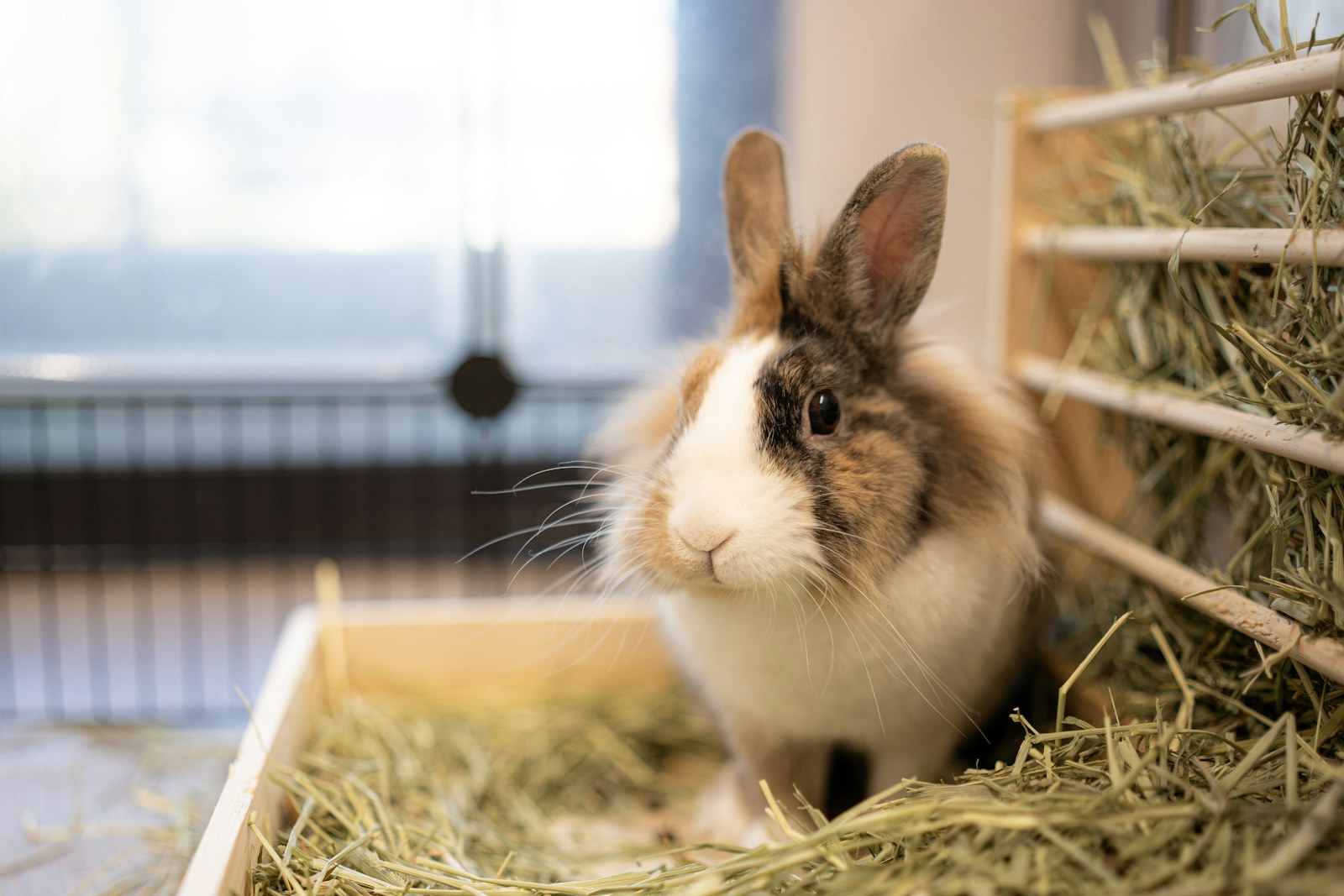
Quick answer: good rabbit enrichment starts with natural behaviours: chewing, foraging, hiding, stretching, exploring, and resting away from stress. The safest ideas are usually simple: hay in different places, plain cardboard tunnels, clean untreated wood or rabbit-safe chew items, low platforms, and food-search games that are supervised at first. Enrichment should not replace a proper diet, space, companionship, or veterinary care.
Why foraging matters
Rabbits are built to spend a lot of active time nibbling, investigating, and making small choices. The RSPCA enrichment guidance for rabbits explains that enrichment helps rabbits express natural behaviours such as foraging, hiding, and exploring. For a home rabbit, that can be as simple as scattering part of the daily pellet ration, tucking hay into a clean cardboard tube, or placing safe greens in several spots so the rabbit has to move and search.
Keep the food amount normal. Enrichment is about changing how the rabbit finds food, not adding extra snacks all day. If two bonded rabbits share the space, use more than one foraging point so one rabbit cannot guard the only feeder.
Safe rabbit toys are usually boring in a good way
The best rabbit toys do not need to look fancy. Plain cardboard boxes can become tunnels, hideouts, or hay-stuffed puzzles. Paper bags can hold a small handful of hay. Untreated wooden toys made for rabbits can support chewing. Hay racks, low boxes, and fabric-free tunnels can add routes and choices.
Avoid items with staples, tape, strings, loose plastic, sharp edges, heavy dye, toxic glue, varnish, paint, or chemically treated wood. If using branches, only use rabbit-safe species from untreated trees and remove anything you cannot identify confidently. When in doubt, leave it out.
Chewing is normal, but unsafe chewing is a clue
Rabbits chew because it is normal, useful, and often enjoyable. They also have continuously growing teeth, so diet and chewing opportunities matter. PDSA rabbit health guidance notes that hay and diet are important for teeth and gut health, and recommends contacting a vet when there are concerns about teeth or health changes.
If a rabbit keeps chewing walls, carpets, wires, or furniture, do not only add a toy and hope. First remove access to dangerous items, then ask why the rabbit is chewing there: boredom, stress, not enough hay, limited space, dental discomfort, or easy access to tempting material can all play a role.
Hiding places and choice reduce stress
Because rabbits are prey animals, a good enrichment setup includes places to hide and routes to leave a space. A hide should not become a trap. Two entrances are better than one, especially for bonded rabbits. Place hides away from drafts, extreme heat, dogs, loud appliances, and heavy foot traffic.
Low lookout points can help some rabbits feel more secure, but they must be stable, non-slip, and low enough to use comfortably. Do not add high platforms to a rabbit who is stiff, injured, elderly, or unsure without asking a rabbit-experienced veterinarian.
A simple safety check before giving a new toy
- Can the rabbit get stuck in it?
- Could it splinter, tangle, or form sharp pieces?
- Does it contain tape, staples, glue, dye, fragrance, or plastic?
- Can every rabbit in the pair or group access food without guarding?
- Can you remove it quickly if it becomes wet, dirty, or damaged?
Introduce one new idea at a time and watch the first few sessions. Some rabbits are bold; others need a familiar piece of hay or a tiny amount of their normal food to investigate. Stop an item if it creates guarding, panic, heavy chewing of unsafe parts, or reduced eating.
When enrichment is not enough
Enrichment can support wellbeing, but it cannot diagnose illness. Contact a rabbit-experienced veterinarian quickly if your rabbit stops eating, passes fewer or no droppings, seems hunched, hides more than usual, has a dirty bottom, drools, loses weight, or appears painful. Rabbit problems can become urgent faster than many owners expect.
Related guides
For the food side of daily care, read A Simple Rabbit Diet and Care Guide. For a broader species comparison, see How Pet Food Needs Change by Life Stage. If your rabbit is older, the monitoring ideas in Senior Pet Nutrition can help you track appetite, weight, and comfort before a vet visit.
Sources and further reading
Informational notice: This article is educational and is not veterinary diagnosis or treatment. Ask a qualified rabbit-experienced veterinarian for individual care, urgent symptoms, dental concerns, diet changes, or behaviour changes.