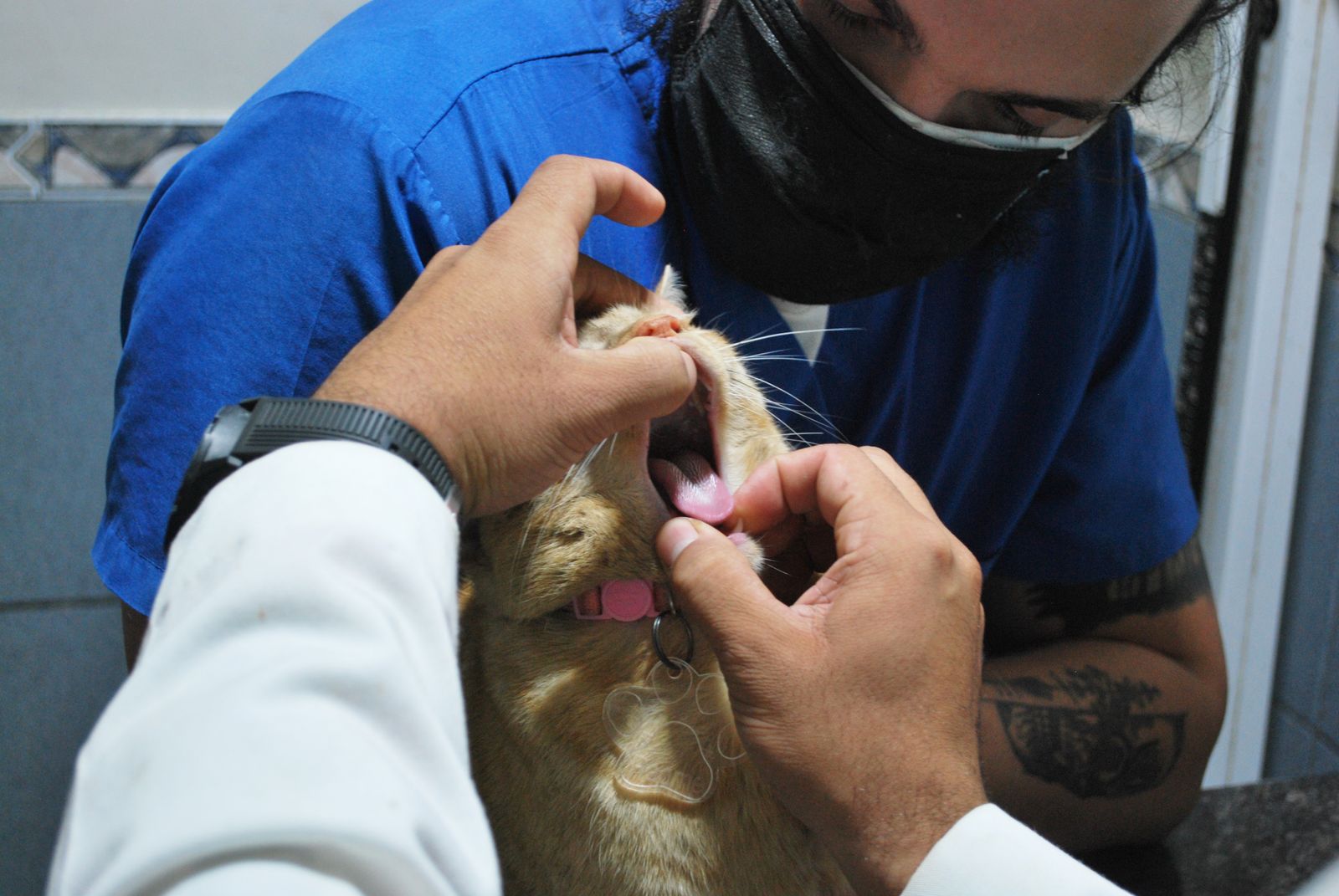
Quick answer: start before you expect to brush. Let your cat investigate a cat toothbrush and feline toothpaste, reward calm contact around the muzzle, and add only one small step at a time. When your cat accepts the brush, gently lift the lip and clean the outside surfaces with short, careful movements. Never use human toothpaste. If the gums look painful, red, swollen, or bleeding, or your cat has trouble eating, contact a veterinarian before brushing.
Check the mouth before beginning
Home tooth brushing helps remove plaque, but it cannot diagnose or treat established dental disease. Cornell lists red or swollen gums, bleeding at the gum line, bad breath, drooling, reluctance to eat, head turning while chewing, and a preference for soft food among signs that can occur with feline dental problems. Do not force a home routine through these signs. Severe gingivitis can make brushing painful, so a veterinary assessment should come first.
A calm cat may still have dental disease that is difficult to see. The American Veterinary Medical Association explains that plaque and tartar below the gum line can damage supporting tissues, and a complete veterinary evaluation may require dental radiographs and anesthesia. Brushing is preventive care between examinations, not a substitute for them.
Gather cat-safe supplies
Use a small, soft cat toothbrush or another brush your veterinary team recommends, feline toothpaste or tooth gel, and a reward your cat already enjoys. Human toothpaste is not appropriate: Cornell warns that human products can be toxic to cats. Keep the session in a quiet place with secure footing. Choose a time when neither you nor the cat is rushed.
Check the package directions and expiry date. For a cat with a medical condition, food sensitivity, oral pain, or a recent dental procedure, ask the veterinary team which products and timing are suitable.
Use a gradual four-stage introduction
- Introduce the scent and taste. Let your cat inspect the closed brush and a tiny amount of feline toothpaste. Reward voluntary interest; do not smear paste into the mouth by surprise.
- Practise gentle face handling. Briefly touch the cheek or lift the lip, then release and reward. Stop while the cat is still comfortable. Repeat this easier step until handling no longer causes avoidance.
- Add the brush without scrubbing. Let the cat lick toothpaste from the brush or briefly touch the brush to an outer tooth. Cornell's training sequence introduces the toothpaste and brush before full brushing.
- Brush the outer surfaces. Gently lift the lip, angle the bristles toward the line where teeth meet gums, and use small, careful movements on the outside surfaces. Keep the first successful sessions very short and finish with a reward.
Progress is based on the cat's response, not a fixed calendar. If your cat pulls away, freezes, growls, swats, or tries to bite, stop and return to an easier stage later. Restraint can turn oral care into a struggle and may be unsafe for both of you.
Build a routine without chasing perfection
The AVMA identifies regular tooth brushing as the most effective home action for keeping teeth healthy between dental cleanings. Daily brushing is best, although several times a week may still help when daily care is not possible. A routine becomes more realistic when it uses the same quiet location, the same short cue, and a predictable reward.
Track which side was accepted, how long the cat stayed relaxed, and whether you saw redness, odor, drooling, or a change in eating. These notes can help your veterinarian understand what changed.
Know when to contact a veterinarian
Arrange a dental check if you notice persistent bad breath, red or bleeding gums, drooling, pawing at the mouth, dropping food, chewing on one side, difficulty eating, reduced appetite, facial swelling, a loose or damaged tooth, or a sudden change in tolerance. Contact a veterinary clinic promptly if your cat stops eating or appears to be in significant pain. Do not attempt to scrape tartar, pull a tooth, or use a human pain medicine at home.
If your cat cannot tolerate brushing despite gradual practice, ask about alternatives appropriate to that cat. AAHA notes that some adult cats may benefit from a dental diet when routine brushing is not accepted. Products vary, and an alternative home-care item does not replace a professional dental examination when disease is suspected.
Frequently asked questions
How often should I brush my cat's teeth?
Daily brushing is the goal recommended by veterinary sources. If daily care is not yet realistic, build the routine gradually and ask your veterinarian what schedule and alternatives fit your cat.
Can I use human toothpaste on my cat?
No. Use toothpaste or tooth gel made specifically for cats. Cornell warns that human dental products can be toxic to cats.
Do I need to brush the inside surfaces of my cat's teeth?
Cornell's guidance focuses on gently brushing the outside surfaces, where the lips and cheeks meet the teeth. Ask your veterinary team to demonstrate the technique if you are unsure.
What if my cat will not tolerate a toothbrush?
Stop before the interaction becomes a struggle. Return to an easier handling step and ask your veterinarian about other evidence-based home-care options; alternatives do not replace a dental examination when disease is suspected.
Related reading
Plan low-stress travel with our cat carrier training guide, compare everyday changes with the cat sleep by life stage guide, and use the cat hydration guide when reviewing water access and warning signs.
Sources
- Cornell Feline Health Center: Feline Dental Disease
- American Animal Hospital Association: Feline Dental Care
- American Veterinary Medical Association: Pet Dental Care
Educational guidance only; it does not diagnose or treat dental disease. The photograph is a licensed stock image of a veterinary dental examination, not a Paw After Tale clinic, customer, product, or treatment result.