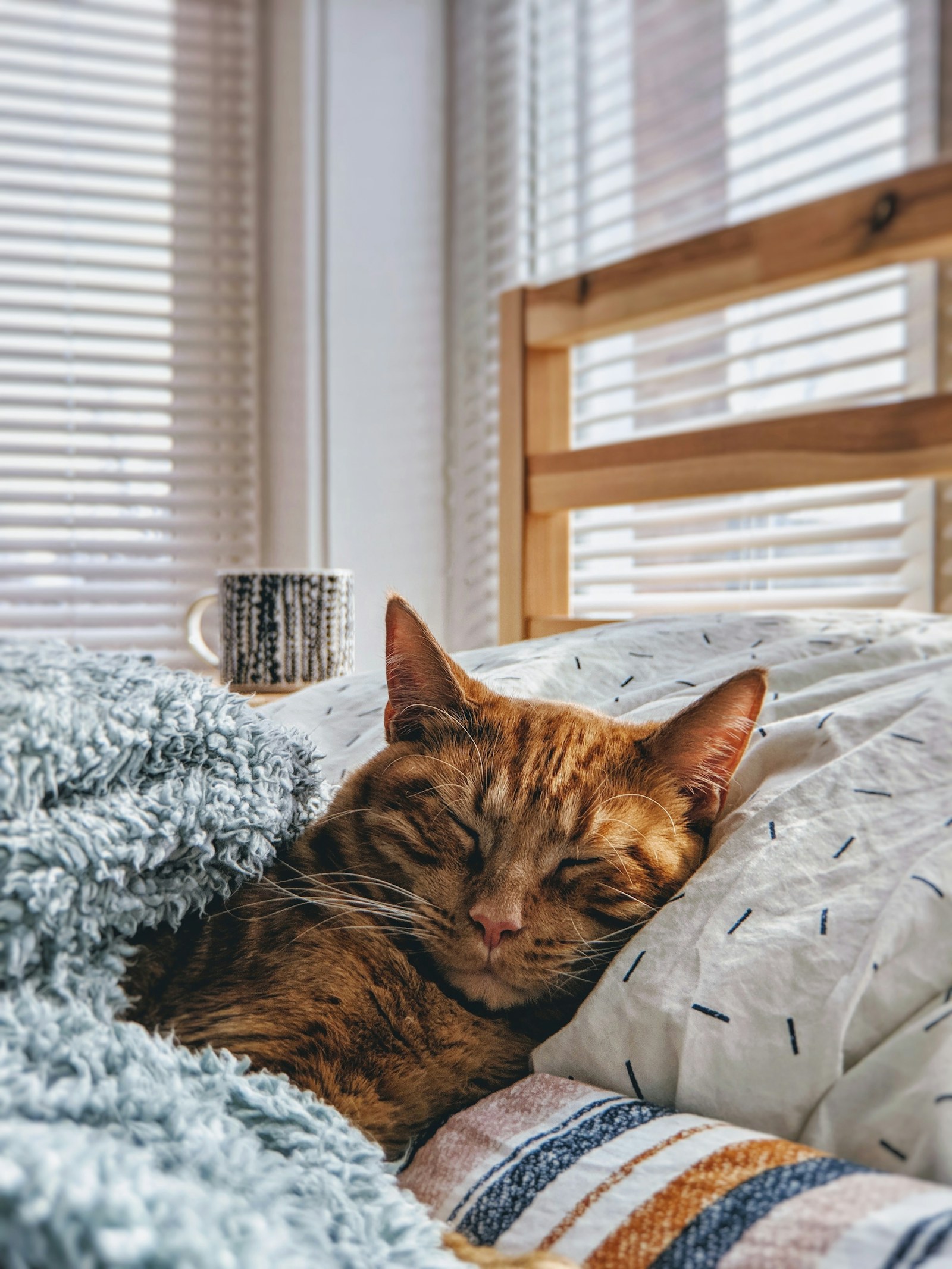
Quick answer: there is no single number of sleep hours that every cat should meet. Cats naturally take many naps, and kittens and older cats often rest more than healthy adult cats. The most useful baseline is your own cat's familiar pattern: when they sleep, wake, eat, play, groom, use the litter tray, and interact with people.
Cats Protection explains that cats spend a great deal of time asleep and that kittens and senior cats are likely to sleep more than the average adult. Rest helps cats conserve energy between short periods of exploration and play. A quiet day of sleeping is not automatically a problem; a persistent change from your cat's normal routine is more meaningful than a number on a chart.
Kittens: sleep supports growth and learning
Young kittens may play intensely, then fall asleep very quickly. Their bodies and brains are developing, so undisturbed rest is part of normal care. Cats Protection's kitten guidance recommends giving kittens plenty of time to sleep and providing a quiet, comfortable place where they will not be repeatedly disturbed.
Instead of waking a sleeping kitten to create a schedule, build a safe rhythm around short play, food, litter access, and rest. Keep cords, small objects, and unsafe climbing routes away from the sleeping area. If a kitten is difficult to wake, weak when awake, not eating, or showing breathing or toileting problems, contact a veterinarian promptly rather than assuming it is simply tired.
Adult cats: look for a steady pattern
Healthy adult cats may sleep in several locations and at different times of day. Indoor cats can appear to sleep more because their environment is predictable and does not require long periods of hunting or travel. Some cats are more active at dawn or dusk, while others adapt to the household's routine.
Track the pattern for a week if you are unsure. Note appetite, water intake, play, grooming, litter-tray use, and whether your cat wakes comfortably. A cat who naps often but still eats, moves, grooms, and responds normally may simply have a relaxed routine. Avoid using a sleep app or a fixed “normal” number as a substitute for observing the whole animal.
Mature and senior cats: more rest, lighter sleep
As cats age, they may slow down and sleep more. Cats Protection describes cats as mature from around seven years and elderly from around 11, while other life-stage systems use different labels. These labels are useful for planning reviews, not for diagnosing a cat from age alone.
Older cats may prefer soft, easy-to-reach resting places. Keep beds away from cold drafts and provide more than one option so a cat does not need to jump far or climb stairs to settle. A senior cat may also sleep more lightly or wake more often. Changes in grooming, jumping, appetite, thirst, weight, or nighttime vocalization matter alongside sleep.
When a sleep change deserves a veterinary check
Speak with a veterinarian when a change is sudden, persistent, or paired with other signs. Cats Protection recommends seeking help if a cat is sleeping much more than usual or hiding more. VCA notes that pain in aging cats can appear as reduced grooming, reluctance to jump, changes in interaction, or other behaviour changes; these should not be dismissed as “just old age.”
- Record when the change started and whether it is getting worse.
- Note appetite, water, weight, grooming, mobility, breathing, and litter-tray changes.
- Take a short video of unusual sleep, walking, or nighttime behaviour if safe to do so.
- Do not give human medicine or supplements based on a sleep change.
- For severe breathing difficulty, collapse, repeated vomiting, or inability to urinate, seek urgent veterinary care.
Make a simple sleep-and-care baseline
Choose three or four ordinary days and write down the rough pattern rather than trying to time every nap. Note the favourite sleeping spots, normal wake-up response, meal interest, play, grooming, and litter routine. This baseline can help you notice meaningful changes and gives your veterinarian clearer information.
Related guides
For food decisions, read How Pet Food Needs Change by Life Stage and Senior Pet Nutrition: What to Watch First. If you are building a calm place to keep photos and memories of a companion, our Pet Care Guides and remembrance articles offer additional starting points.
Sources and further reading
- Cats Protection: Cats and sleep
- Cats Protection: Elderly cats care guide
- VCA Animal Hospitals: How to recognize pain in aging cats
Informational notice: This article is educational and is not veterinary diagnosis or treatment. Sleep patterns vary by cat. Contact a qualified veterinarian for individualized advice, urgent symptoms, or a persistent change in behaviour.