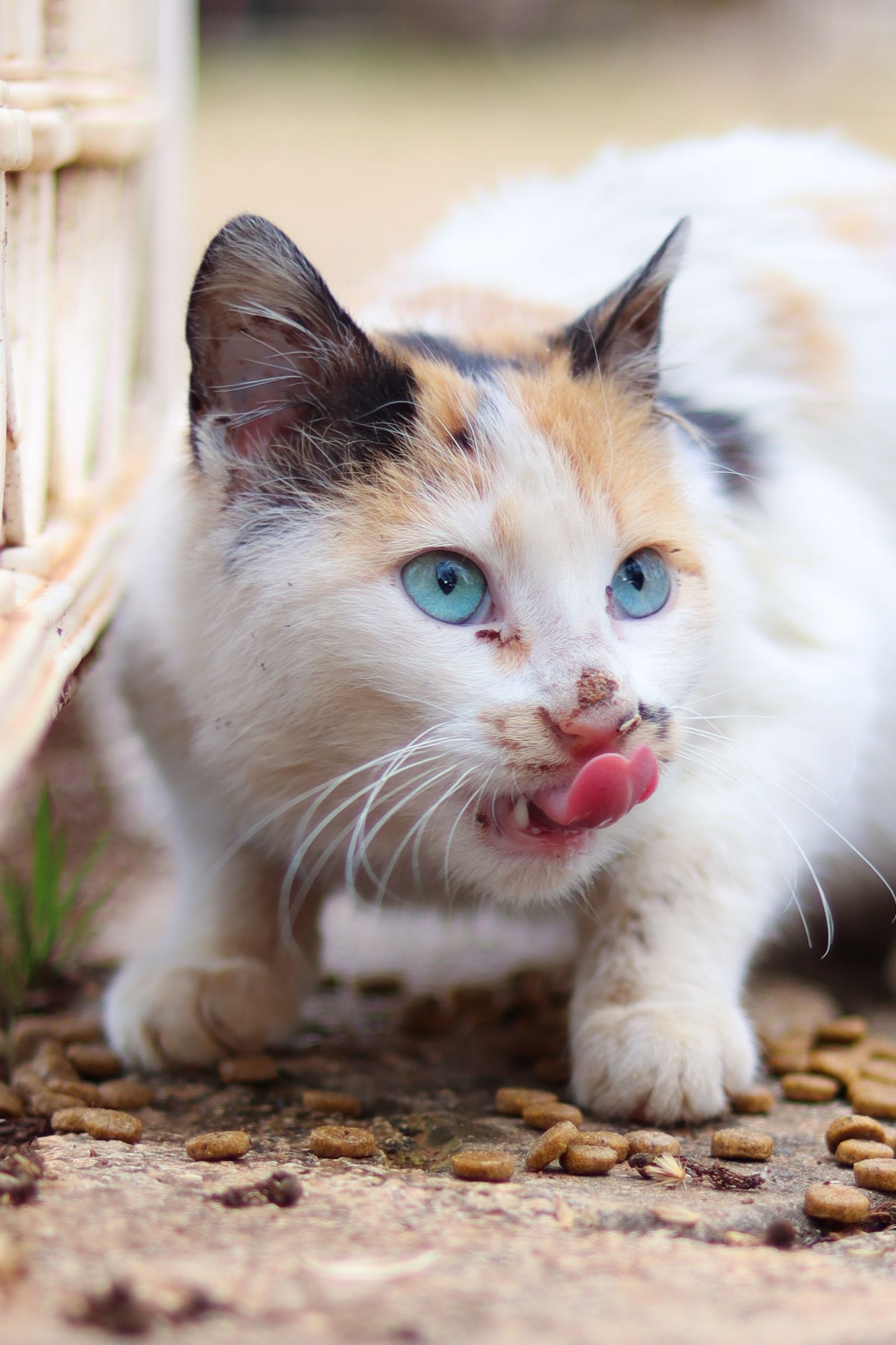
Quick answer: cats should always have clean water available, but hydration is not only about seeing a cat drink. Food moisture, urine changes, appetite, energy, vomiting, heat, and medical conditions can all change what you notice at home. If your cat stops eating, seems weak, urinates very differently, or shows signs of pain, contact a veterinarian instead of trying to fix hydration with home tricks.
Start with easy water access
Place water away from the litter box and away from busy walkways. Some cats prefer a wide bowl that does not press on their whiskers; others prefer more than one water station. Wash bowls often so smell and residue do not discourage drinking. A fountain can help some cats, but it still needs cleaning and filter changes.
Wet food can support moisture intake
Wet food contains more water than dry food, so it can be useful for cats that accept it. Change food gradually and keep the total diet appropriate for the cat's age, weight, and health. Cornell Feline Health Center feeding guidance explains that cats need a complete and balanced diet, and any feeding plan should fit the individual cat rather than one internet rule.
Watch the litter box and daily pattern
A cat who drinks more than usual, urinates much more, urinates very little, strains, vocalizes, hides, or stops using the litter box may need veterinary help. A single wet paw print by the bowl does not tell the full story. Write down changes in drinking, food, urination, stool, vomiting, and energy for two or three days if the cat otherwise seems stable. For urgent signs, call sooner.
When to call a veterinarian
Do not wait if a cat is not eating, is repeatedly vomiting, seems painful, has trouble urinating, is unusually weak, or is a kitten, senior cat, or cat with known disease. The Merck Veterinary Manual notes that changes in thirst and urination can be linked with several medical problems, so home observation should support a vet visit, not replace it.
Related guides
For food choices across ages, read How Pet Food Needs Change by Life Stage. For age-related monitoring, see Senior Pet Nutrition. If you are also tracking sleep and behaviour, use How Much Sleep Do Cats Need by Age?.
Sources and further reading
- Cornell Feline Health Center: Feeding your cat
- Merck Veterinary Manual: Kidney and urinary tract disorders in cats
- AAHA Senior Care Guidelines for Dogs and Cats
Informational notice: This article is educational and is not veterinary diagnosis or treatment. Ask a qualified veterinarian for individual hydration, diet, urinary, kidney, or appetite concerns.