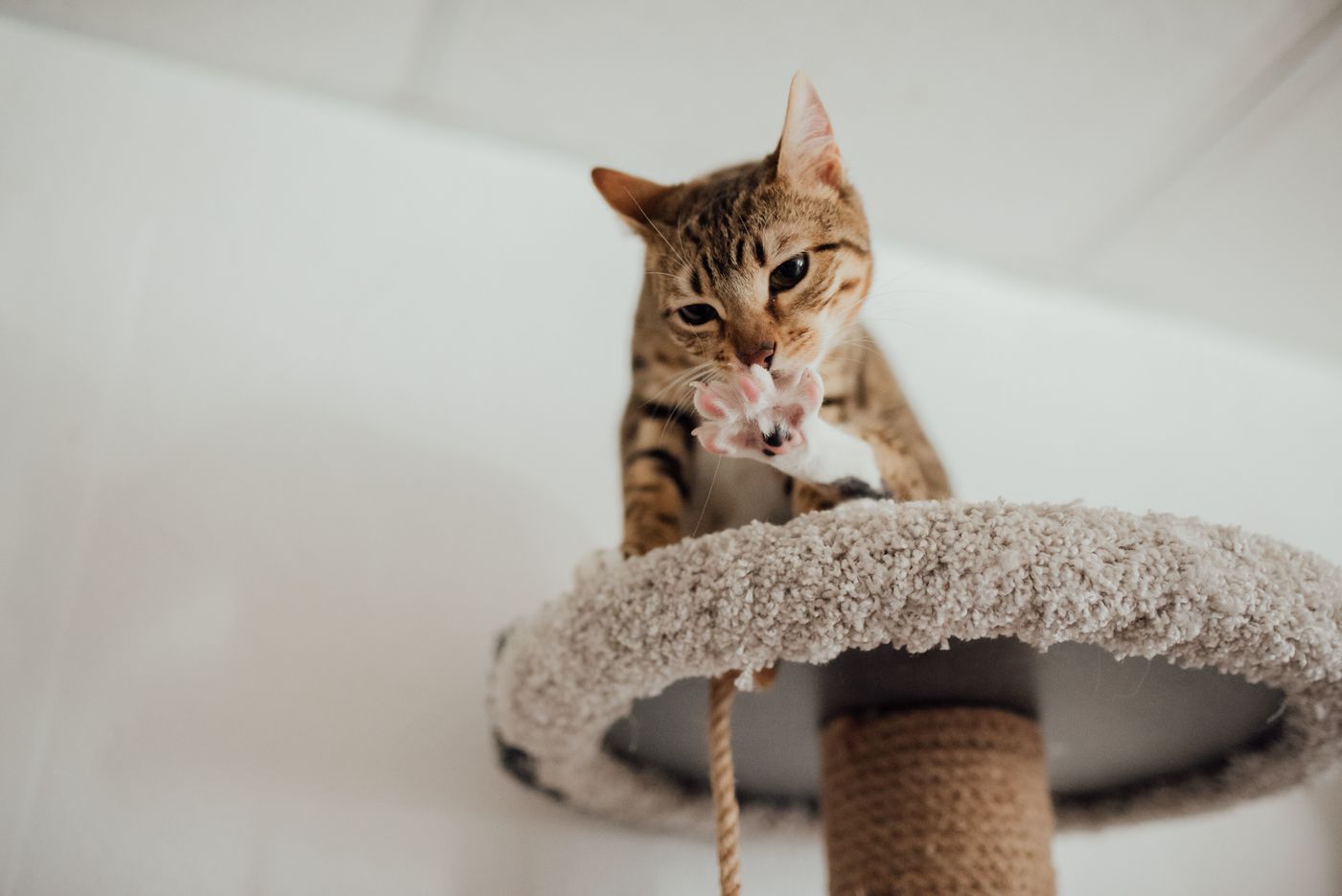
Quick answer: to redirect a cat that scratches furniture, offer an appealing scratcher beside the affected area, reward voluntary use, and protect the furniture while the new habit develops. Scratching is a normal feline activity. The aim is to give it a suitable place in your home. Observe the surface and direction your cat already chooses before buying equipment.
Start with what your cat is telling you
Cornell's Feline Health Center explains that scratching leaves scent marks and helps remove the outer claw sheath. A sofa corner and a carpet may attract different scratching movements. Watch whether your cat reaches upward, works across a flat surface, or uses an angled edge. Those observations are more useful than choosing a post only because its color matches the room.
Write down three details: the location, the material, and the position of the cat's body. For example, your note might say, ��left sofa arm, woven fabric, standing upright.�� This gives you a clear starting point for comparing alternatives.
Choose a scratcher worth using
The ASPCA recommends trying different materials and orientations. A post should stay steady during use, and a vertical option should allow a full stretch. Cardboard, sisal, and carpet offer different textures. A horizontal pad may suit a cat that repeatedly chooses the floor. Check that your chosen item stays in place when the cat leans into it.
Before adding several expensive items, make a short comparison list: what the cat currently scratches, what the proposed scratcher offers, and where it will fit. Keep receipts and product instructions so you can check assembly and maintenance requirements. Appearance alone cannot tell you whether your cat will use a particular design.
Put the alternative where the habit happens
Cornell advises placing a post next to the area the cat already scratches. A scratcher hidden in a spare room may be inconvenient when the preferred spot is the living-room sofa. If there are several habitual locations, consider an appropriate option near each one.
Make a simple room sketch and mark both the furniture target and the alternative. Take a photograph of the setup before changing it. That gives you a useful record if you later ask for professional advice, and helps other household members keep the arrangement consistent.
Reward the behavior you want
FelineVMA recommends positive reinforcement: reward scratching on the desired surface with a preferred treat, toy, or attention. Let the cat investigate voluntarily. The association warns that verbal or physical punishment, including water sprays, can create fear and interfere with learning.
The ASPCA also warns against holding a cat at a post and dragging its claws across the surface. Leave room for the cat to approach and leave. A calm opportunity to explore is easier to repeat than a struggle.
Keep a practical observation log
Use one line per observation rather than trying to remember the whole week. Record:
- The date and the exact location used.
- Which scratcher was available and whether it moved.
- Whether the cat approached independently.
- The reward offered after use.
- Any new household event or change in the setup.
Review the notes before changing several things at once. If you replace the material, move the post, and switch the reward together, it becomes difficult to tell which change mattered. There is no promised number of days for success. Your notes are a way to make the next decision clearer, rather than a scorecard for the cat.
Protect furniture while keeping an alternative available
FelineVMA describes using a furniture protector alongside a tall, sturdy scratcher in the same location. Check the protector's instructions and keep the scratcher accessible. The ASPCA advises keeping a familiar, well-used post instead of discarding it simply because it looks worn.
When to contact a veterinarian
Ask your veterinarian about a sudden behavior change, apparent pain, paw injury, or difficulty moving. Furniture scratching and scratching the skin are different observations; describe exactly what you see. If handling leads to biting or defensive scratching, pause and seek advice rather than restraining the cat. FelineVMA notes that pain or illness can contribute to protective biting or scratching. Persistent household damage despite a consistent setup is also a reason to discuss veterinary behavior support.
Frequently asked questions
Why does my cat scratch the sofa when a post is available?
The post may differ from the preferred spot in texture, orientation, stability, or location. Compare those features before adding another post.
Should I move my cat's paws on the scratching post?
No. Allow voluntary exploration. Forcing the claws over the surface can frighten a cat and make the post less appealing.
Should I throw away a worn scratching post?
A familiar, well-used post can remain appealing. Do not replace it only because it looks untidy; check its condition and stability.
Will spraying water stop furniture scratching?
Use an appropriate scratcher and reward its use instead. FelineVMA warns that punishment such as water sprays can increase fear and damage trust.
Related reading
Prepare for a consultation with our cat carrier training guide, keep track of everyday routines with cat sleep by life stage, and review cat hydration and water access.
Sources
- Cornell Feline Health Center: Feline Behavior Problems �� Destructive Behavior
- ASPCA: Destructive Scratching
- FelineVMA: Training Techniques for Addressing Undesirable Behaviors
General education only; this guide does not diagnose a medical or behavioral condition. Photograph: Arina Krasnikova via Pexels, used as a general illustration of a cat on a cat tree.