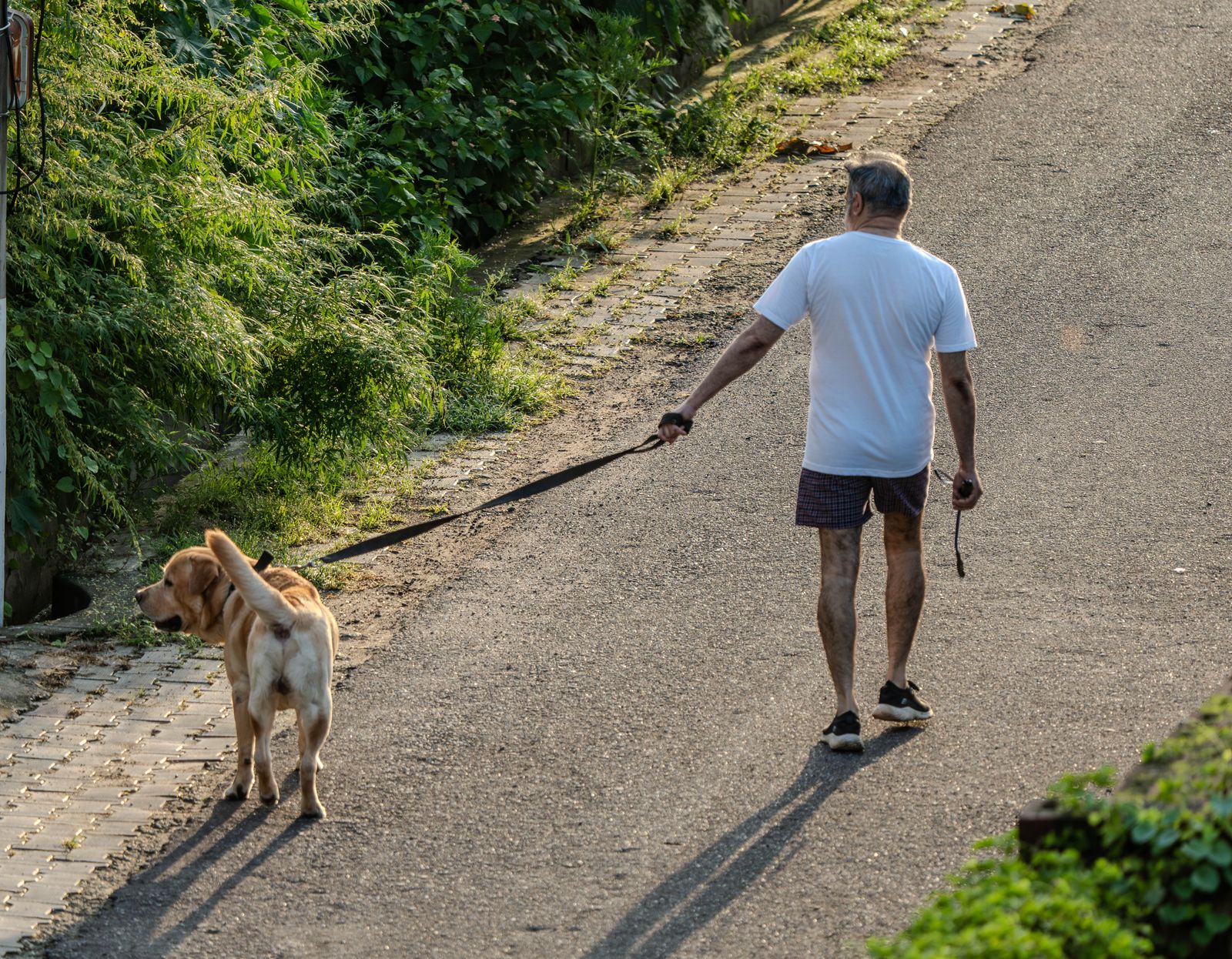
Quick answer: a good senior dog routine is predictable without being rigid. Offer food, water, toilet breaks, gentle movement, rest, and short mental activities at familiar points in the day. Adjust the pace and the environment to your dog’s comfort, breed, size, mobility, and veterinary advice. The goal is a day your dog can complete comfortably, not a fixed number of minutes or steps.
Senior status is not defined by one universal birthday. The American Animal Hospital Association describes senior care as a distinct life stage and notes that breed and lifespan vary. Your dog’s own baseline is therefore useful: record how they normally rise, walk, eat, rest, groom, toilet, and respond to the household.
Morning: an easy start
Give your dog time to wake and stand before asking for a walk. Put water where it is easy to reach and use a nonslip path from the bed to the door. A short toilet outing can be followed by a slow sniffing walk if your dog is comfortable. Sniffing and choosing the pace provide mental stimulation without requiring a fast run.
Observe the first few steps. Hesitation, repeated slipping, a hunched posture, or a new reluctance to use stairs is useful information to record. Do not force a longer route because it was easy on a previous day. Weather, flooring, pain, and sleep quality can all change what is comfortable.
Midday: movement, food, and rest
Break activity into manageable sessions. The AKC recommends age-appropriate exercise and describes shorter, lower-impact activities as options for many senior dogs, while also advising owners to follow veterinary guidance for individual health conditions. A slow walk, a gentle training game, or a food puzzle can be enough for one session. Stop while your dog is still comfortable rather than waiting for obvious fatigue.
Keep meals and medication discussions with your veterinarian separate from generic internet advice. AAHA notes that nutritional needs and body condition can change with age, so track appetite, weight, water intake, and the ability to chew. Do not add supplements or change a prescribed plan because a routine article recommends it.
Make the home easier to navigate
Use well-secured rugs or mats on slippery routes, provide padded bedding, and keep favourite resting spots on the level your dog can reach safely. AAHA’s senior-care home tips also emphasize gentle grooming, nail care, clean bedding, and extra nursing support for dogs with reduced mobility. Keep bowls, doors, and toilet access predictable so your dog does not need to cross a slippery room or climb unnecessarily.
At night, a small light can make the path to the water bowl or door easier to see. Keep the routine familiar, but let your dog choose extra rest. A comfortable senior dog may sleep more on some days and be more interested in sniffing or social contact on others.
Add gentle enrichment
Enrichment does not need to be strenuous. Hide a few pieces of the dog’s normal food in an easy-to-search area, practice a familiar cue for a minute, offer a safe chew recommended for your dog, or sit together in a quiet outdoor space. Use surfaces and activities your dog can manage without jumping, twisting, or rushing. The routine should create opportunities for choice, not pressure.
Track changes before they become a crisis
Write down sudden or persistent changes in appetite, thirst, weight, breathing, mobility, sleep, grooming, toileting, hearing, vision, or interaction. AAHA recommends a tailored senior-care plan, and videos or short notes can help a veterinarian understand what happens at home. Contact a veterinarian promptly for breathing difficulty, collapse, severe pain, inability to walk, repeated vomiting, inability to urinate, or any rapid deterioration.
- Keep a simple morning and evening note for one week.
- Record which surfaces, stairs, and walk lengths are comfortable.
- Use the same calm cues so your dog can predict transitions.
- Bring questions and videos to a regular veterinary visit.
Related guides
For food and life-stage questions, read How Pet Food Needs Change by Life Stage and Senior Pet Nutrition: What to Watch First. Browse the Pet Care Guides for more practical, source-led topics.
Sources and further reading
- AAHA: Home tips for families of senior pets
- AAHA: 2023 Senior Care Guidelines introduction
- AKC: How to know when a dog is a senior
Informational notice: This article is educational and is not veterinary diagnosis or treatment. Senior dogs differ by breed, size, health, and history. Contact a qualified veterinarian for individualized advice or urgent symptoms.